
Employers ' guide to the Prevention of drug abuse in work environments
The government of the Kingdom of Saudi Arabia pays unique and distinguished attention to the issue of narcotics and psychotropic substances, as this phenomenon targets the Saudi youth, whom the government of the Kingdom of Saudi Arabia considers the basis of its renaissance and the pillar of its development.
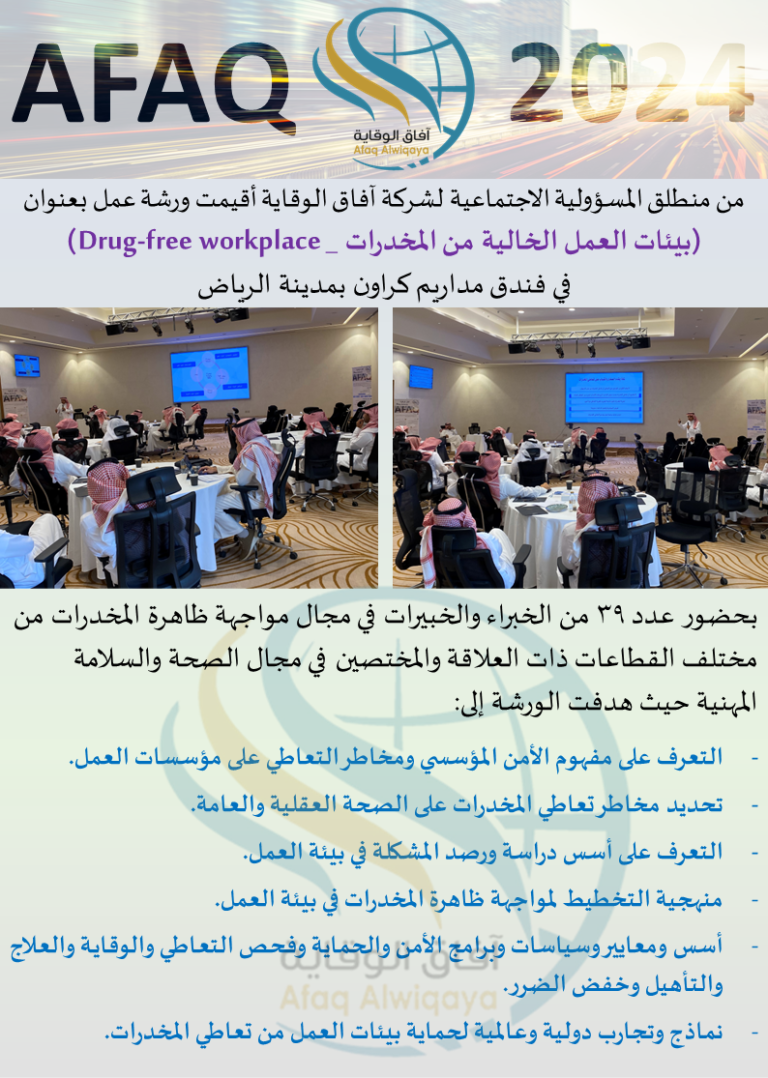
Accordingly, the Prevention Horizons team of experts reviewed the best global experiences in the field of drug-free work organization policies
It is scientifically proven that the use of psychotropic drugs impairs the ability to make decisions and causes physical disability. Unfortunately, no organization, no matter its size, type, or location, is immune to substance abuse issues

For example, in the United States, approximately 9% of all working adults suffer from alcohol, substance use disorders

These reports estimate that about 70% of adults in the U.S. with an alcohol or substance use disorder are employed
Ideally, workplaces should offer employer-supported substance abuse prevention policies and treatment and recovery programs, where employers use evidence-based policies to reduce multiple risk factors According to the Center for Disease Control and Prevention (CDC)
A drug-free work environment prevents exposure to work factors that cause or perpetuate substance use disorders. In addition, it minimizes barriers to seeking and receiving care and maintaining recovery. It also educates the management team and workers on issues related to substance use disorders to reduce stigma.
Workplace Substance Abuse Prevention Practices
Drug, alcohol, and substance abuse prevention programs in the workplace have proven to be effective. The most common elements of these programs include drug testing, education and prevention, and internal policies related to drug and alcohol use in the workplace

Internal policies
Ideally, this should include high-quality job support programs that are available to those struggling with substance abuse. Workplace-supported recovery programs often support second jobs, provide workplace accommodations, and other assistance in returning to work

Education and prevention
Education and prevention is the best first line of defense. Useful educational programs include drug awareness days, written materials about substances and drug use, and media related to drug use in the workplace

Substance Abuse Testing
Drug testing programs carry serious legal risks if conducted improperly. It is common knowledge that there are different and varying methods of drug testing and employers are advised to consult legal counsel before implementing these policies
Fostering a positive work culture
The best way to reduce the stigma of addiction is to foster a supportive work culture and climate for workers in recovery. Prevention and education can include building awareness, reducing the stigma of addiction, and organizing social events that are free of psychoactive drugs and focused on health
Any work environment can engage in the following activities to mitigate risk factors
Clarity of workplace policies related to substance abuse
Providing education and prevention resources
Provide a supportive work environment for employees
Providing resources to support substance abuse prevention
Create an environment that discourages the use of narcotics or psychotropic substances of all kinds